The Veria Signal — July 27, 2026
China named 14 EU companies on its rare earth restriction list, just four weeks after promising Brussels it wouldn't disrupt EU supply. Also this week: the largest open-weight AI model release yet, trailed almost immediately by a chip-smuggling accusation.
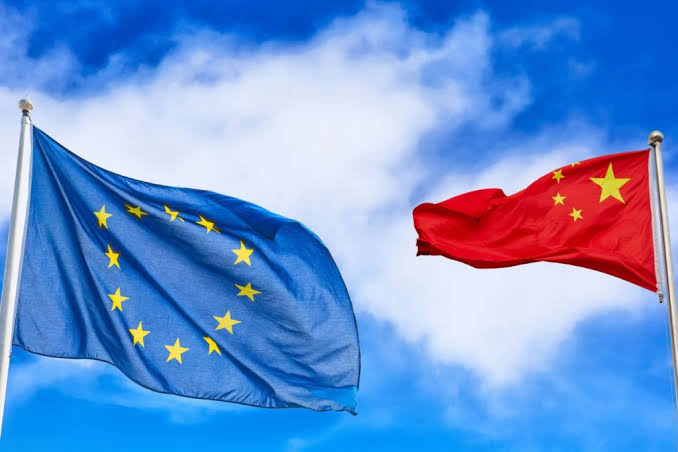


China adds 14 EU companies to its export restriction list
On July 24, China's Commerce Ministry formally added 14 European entities to its dual-use export control list, barring Chinese suppliers from shipping them rare earths, permanent magnets, and related items without special authorization. It's the first time this wave of restrictions — which already covers the ten US firms named in June, including MP Materials and USA Rare Earth — has been extended to EU-based companies by name. Source: S&P Global (July 24, 2026)
What it means for you: this directly tests the assurances Beijing gave Brussels just four weeks earlier, at the June 29 trade consultation launch, that its rare earth licensing wouldn't disrupt EU supply. If your company is among the 14, supplier diversification conversations should already be underway. If you're not, treat this as confirmation that assurances from Beijing have a shelf life measured in weeks, not months. Pricing is already reflecting the strain: the neodymium-praseodymium alloy benchmark used in high-strength magnets was tracked at roughly $133/kg on July 1, up more than 21% from June.
Moonshot AI ships the largest open-weight model yet — and a chip-smuggling accusation follows it
Moonshot AI released full open weights for Kimi K3, a 2.8 trillion-parameter model, on July 26–27 — reportedly the largest open-weight release to date. Within days, the White House's Office of Science and Technology Policy accused Moonshot of using export-restricted Nvidia chips, allegedly routed through Thailand, to help train the model. Source: ThursdAI (late July 2026) — note this claim currently rests on a single primary account and has not yet been independently corroborated; we're treating it as an allegation, not a finding, until more sourcing surfaces.
What it means for you: this is exactly the collision point between China's open-weight AI strategy and US export controls that we track closely here. An accusation like this, even unverified, raises the stakes for anyone using or integrating Chinese open-weight models in a jurisdiction with export control exposure. Due diligence on model provenance isn't a hypothetical concern anymore — it's a live one.
Veria is built by a France-based analyst monitoring the China-Europe technology and trade interface, combining primary-source OSINT with human review before anything gets published. Spotted something we missed, or have a lead? Get in touch.